Wednesday January 6
- 09:00 Registration & welcome coffee
- Morning Invited talks & discussion
- 13:00 Lunch & networking
- Afternoon Invited talks & discussion
- Evening Speaker dinner
MBZUAI · Division of Computing and Mathematical Sciences
A three-day invitational workshop bringing together researchers at the intersection of statistics and artificial intelligence — examining the principles that make modern AI reliable, trustworthy, and scientifically grounded.
Workshop begins in
Program update: the speaker lineup is being confirmed and the full timetable will be published here. Online registration is open.
Register onlineAbout the workshop
AI is rapidly reshaping scientific discovery, industry, and public life — yet the speed of progress can obscure the statistical principles that enable these methods, and the mechanisms behind their failures.
Today's AI systems can be difficult to validate, brittle in deployment, and poorly calibrated about what they do and do not know, raising pressing questions for high-stakes use. This workshop highlights principled ways that statistical thinking — modeling, inference, uncertainty quantification, and theory — can deepen our understanding of modern AI.
The emphasis is on frameworks that deliver conceptual clarity, practical diagnostics, and, where possible, meaningful guarantees that place AI's capabilities on firmer scientific footing. The program mixes invited talks with extended discussion and informal collaboration among a small group of researchers.
Topics
Six threads run through the program. Hover a card for a longer description; click it to open a selected reading.
Reliability, robustness, invariance, interpretability, calibration, and the evaluation of AI systems in high-stakes settings.
Selected readingPredictive uncertainty, Bayesian and frequentist perspectives, and decision-making under uncertainty.
Selected readingThe mathematics of modern deep learning architectures, including transformers and transformer-next models.
Selected readingThe mathematics of pretraining, post-training, and alignment of large models.
Selected readingTheoretical foundations of diffusion and discrete diffusion models, and what they reveal about generative learning.
Selected readingFormal characterizations of chain-of-thought reasoning and other emergent behaviors in modern AI.
Selected readingSpeakers
More speakers and talk titles will be announced. Affiliations are as provided at the time of invitation. Hover a card for a short bio; click to open the speaker’s homepage.(Listed alphabetically by last name.)
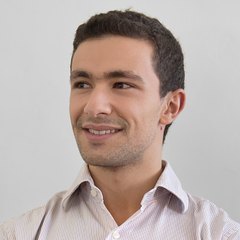
Inria

University of Pennsylvania
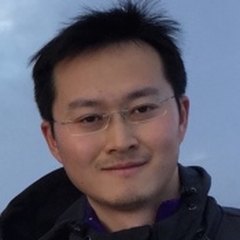
University of California, Berkeley

Princeton University

Tsinghua University

Duke University

Huazhong University of Science and Technology
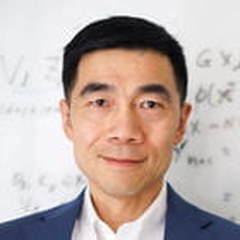
Harvard University

Weizmann Institute of Science
Co-organizer
Harvard University

Technion – Israel Institute of Technology

Harvard University
Toyota Technological Institute at Chicago

University of Michigan
Carnegie Mellon University & MBZUAI

University of Illinois Urbana-Champaign
Want to meet the speakers? Register your interest to attend — attendance is by invitation, and the organizing team will follow up by email.
Register to attendProgram
The outline below is indicative. A full timetable with talk titles will be published once the speaker lineup is complete.
The Day 1 speaker dinner is by invitation. Poster session and discussion formats are being finalised; check back for the full program, add the dates to your calendar, or register your interest to be notified.
Venue & travel
Executive Theatre, Knowledge Center
Mohamed bin Zayed University of Artificial Intelligence
Masdar City, Abu Dhabi, United Arab Emirates
MBZUAI's Masdar City campus is about a 25–35 minute drive from Zayed International Airport (AUH). Taxis and ride-hailing apps serve the campus directly; parking is available for those driving.
A list of recommended hotels will be published here. Options in Masdar City, Khalifa City, and central Abu Dhabi are typically a 20–35 minute drive from campus.
International participants who require a UAE entry visa should contact the organizing team as early as possible so that the necessary arrangements can be made.
Abu Dhabi in January is mild and pleasant, with daytime temperatures typically around 20–25 °C — comfortable for walking and outdoor breaks between sessions.
Attendance
Attendance is by invitation, and capacity is limited. Use the online registration form to tell us who you are, share a homepage or Google Scholar profile, and list representative works. The organizing team will follow up by email; submitting the form expresses interest and does not guarantee a place.
FAQ
Attendance is by invitation. The workshop is designed for invited speakers, poster presenters, and a limited number of participants from MBZUAI and the wider research community. If you would like to attend, email the organizing team.
There is no registration fee. Attendance is by invitation, and capacity is limited.
Unfortunately, we are unable to provide travel support for participants other than invited speakers. Participants cover their own travel and accommodation. For invited speakers, the organizers arrange travel and accommodation.
Yes. The workshop will be held in person at MBZUAI's Masdar City campus in Abu Dhabi.
A poster session is planned. Poster invitations are handled by the organizing team; details will be announced here. You can also register your interest by email.
Select sessions may be recorded and published after the workshop, subject to each speaker's consent. Recording details will be confirmed closer to the event.
Email ai.nexus@mbzuai.ac.ae with the subject line “Stats Foundations of AI 2027”, or contact the chair, Qiang Sun, through MBZUAI.
Organizing committee
Hover for a short bio; click a name to open the organizer’s homepage.

MBZUAI & University of Toronto

UC Berkeley & MBZUAI

University of Southern California & MBZUAI
Weizmann Institute of Science

University of Washington